
We exist to close the full loop.
Our mission is to help communities become more mindful of their relationship with waste, and to turn what we throw away into the living soil Florida needs.
Two problems. One solution.
The waste problem
Food makes up about a quarter of what U.S. landfills receive, and Florida has never met its own state recycling goal. Buried food waste produces methane and returns nothing to the land.
The soil problem
Florida’s sandy soils are naturally low in organic matter, lower than much of the northern U.S. Organic matter is what helps sandy soil hold water and nutrients.
Each one fixes the other. Food waste is exactly what depleted soil is missing. Composted properly, it becomes living soil, so keeping food out of the landfill is also how we rebuild Florida’s ground.
We are students of Dr. Elaine Ingham’s Soil Food Web approach, and we compost under strict thermophilic protocols, hot enough and turned often enough to do the job right. The same nutrient cycling that happens inside a healthy pile carries on in the soil when living compost goes into the beds.
Sources: U.S. EPA, materials and waste facts (2018 data) · Florida DEP, 75% recycling goal · UF/IFAS Extension, soil organic matter
Become a Treasure Coast Compost partner.
We work with local juice shops, açaí bowl shops and organic restaurants in Martin County. We pick up your food waste so it becomes soil instead of landfill.
Talk
We learn your volume, your kitchen and your schedule.
Set up
We provide the bins and show your team what goes in.
Pick up
We collect on a regular schedule, so it never sits in your dumpster.
See the impact
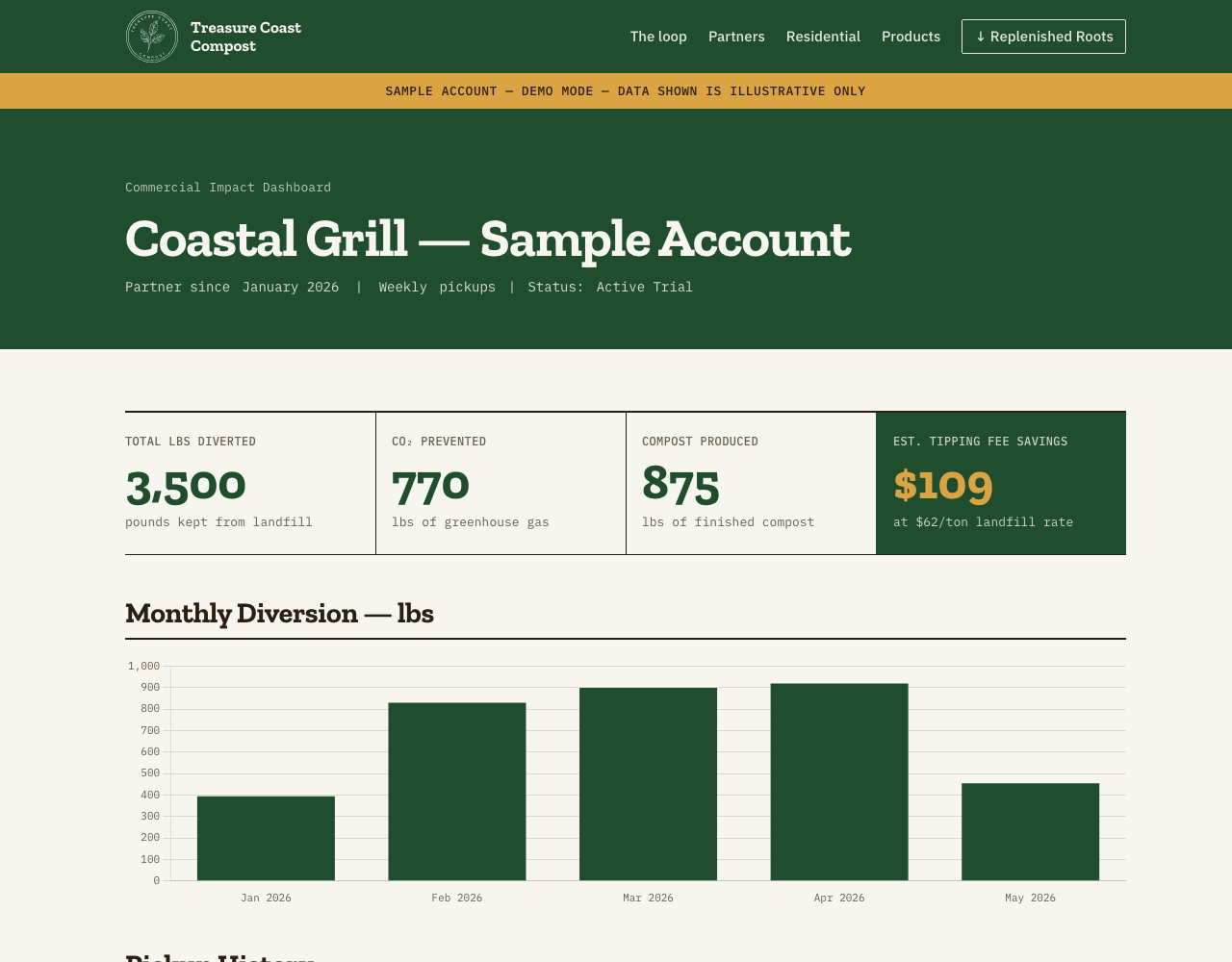
A partner dashboard shows the pounds you have diverted.
Residential drop-off, with select Martin County farm partners.
Your scraps go back to local farmers, who turn them into finished compost to grow crops that are sold right here in your own community.
We are rolling out household drop-off soon, with select Martin County farm partners. Join the list and we will tell you when it opens.
Membership is free. Donations are welcome and optional: Venmo.
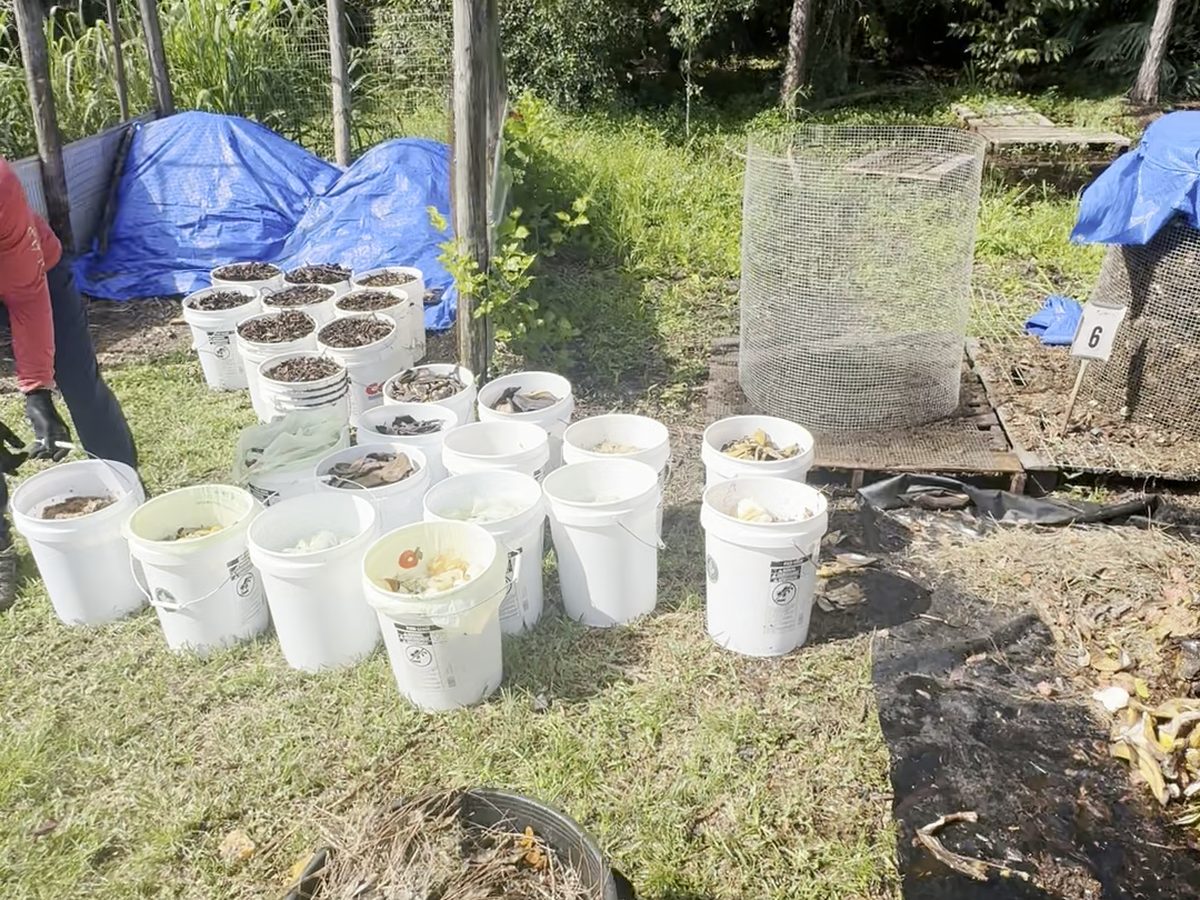
Made from what we collect
Finished compost, compost tea and Bio-Complete liquid extract for local growers, landscapers, nurseries and gardeners. Tea and extract are brewed fresh and used fresh.
From cured compost to your ground.
After our material has finished curing, our sister company, Replenished Roots, makes it available to buy and apply. Replenished Roots focuses on soil testing, and handles implementation and distribution of the finished compost.
Whether you have a garden, a farm or a market garden, they start by testing your soil, then supply and apply what it needs.
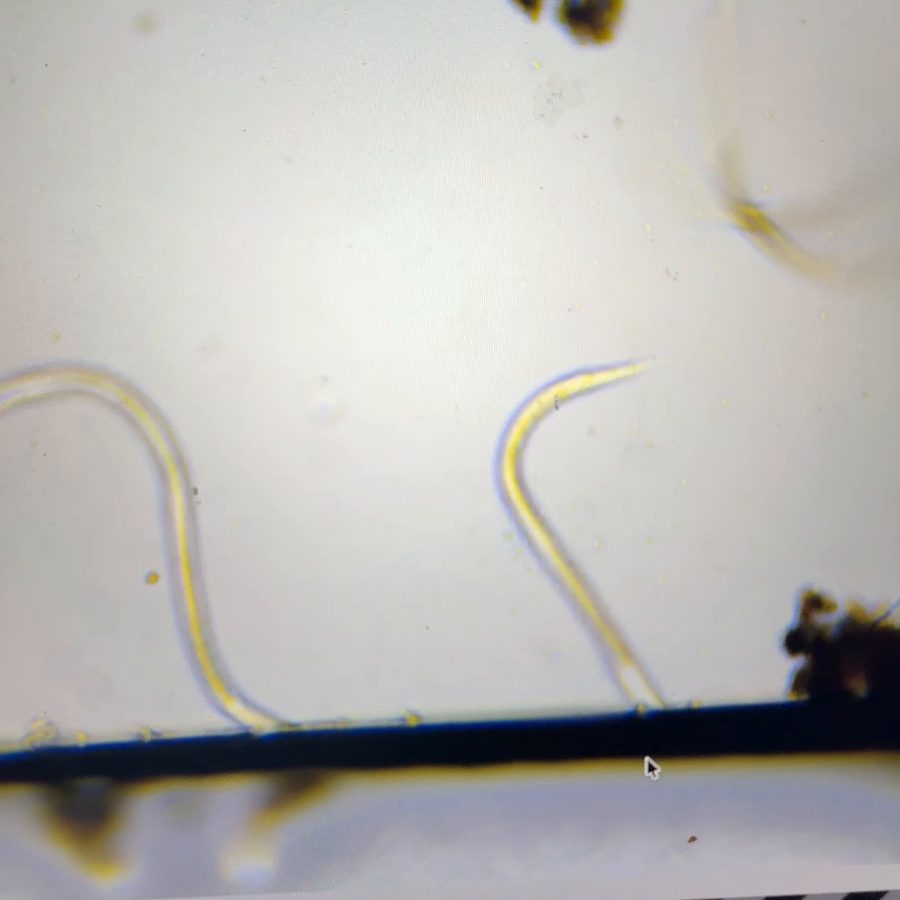
- Test your soil under the microscope
- Buy finished compost, tea and liquid extract
- Apply it to your garden, farm or market garden
The people behind it
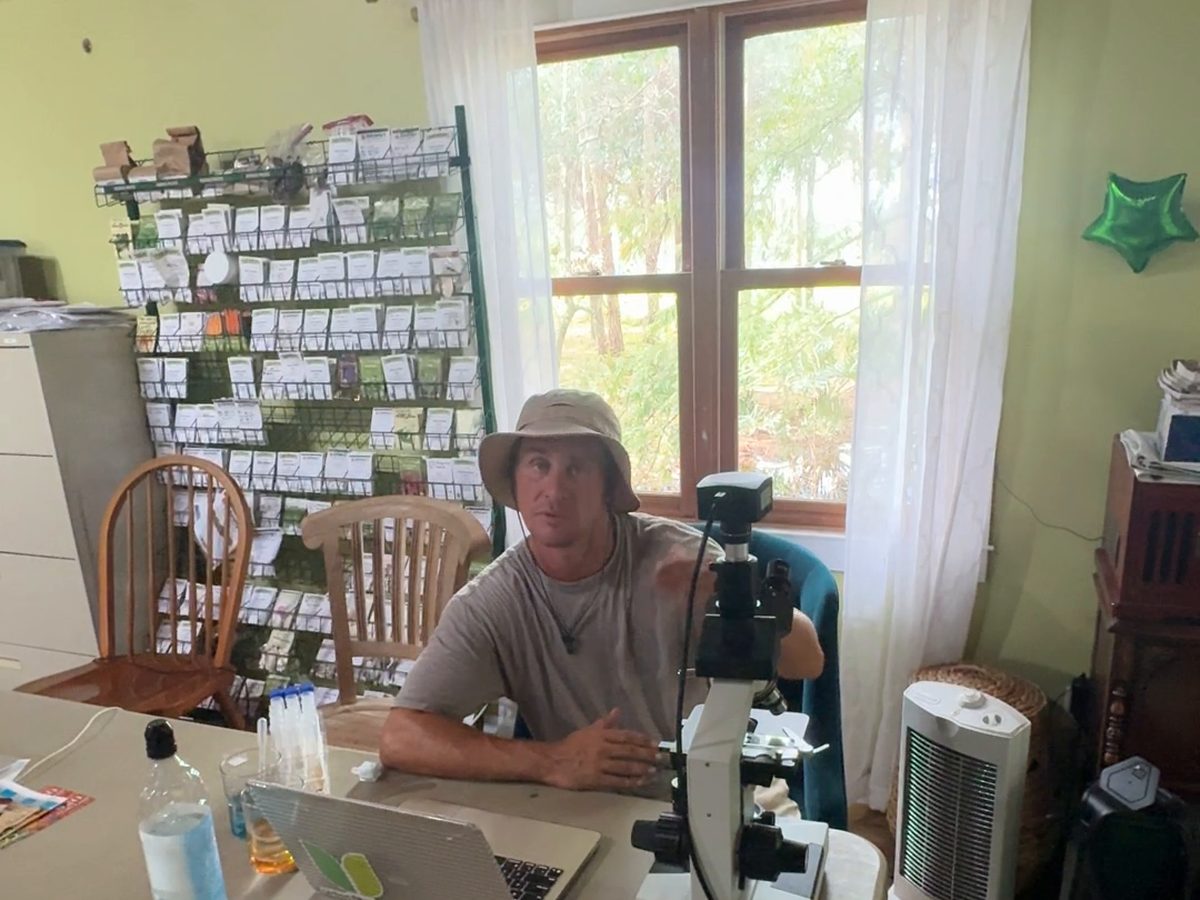
Jake Friesz
Co-founder. Reads soil biology under a microscope and builds what we make around what is actually in the soil.
Jeff Garinger
Co-founder. Business and operations.